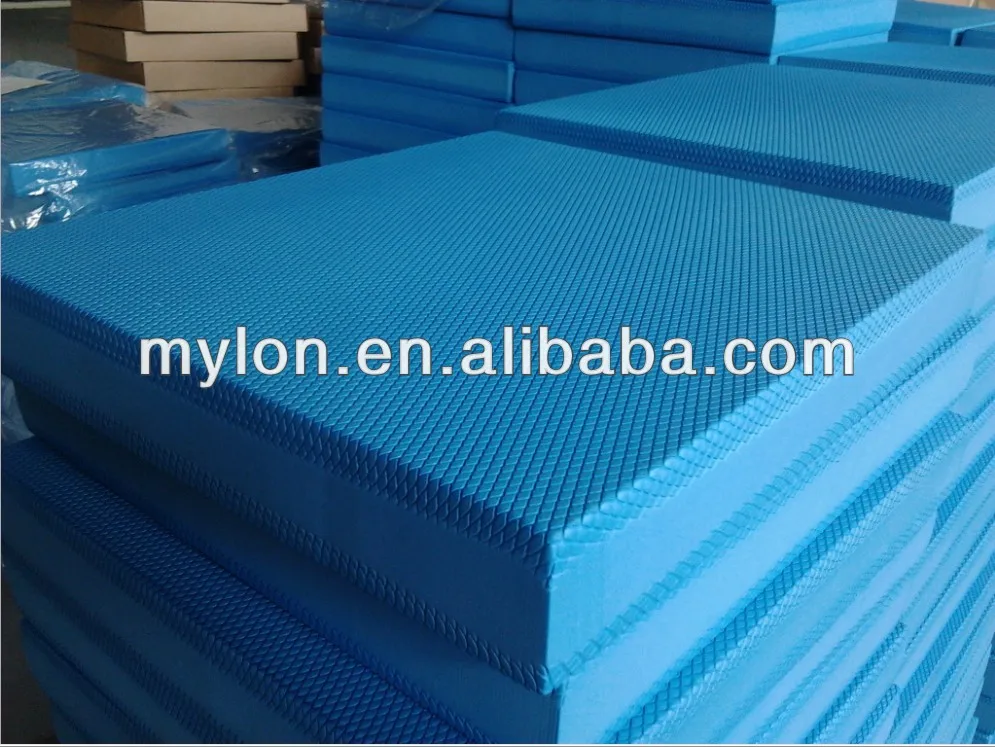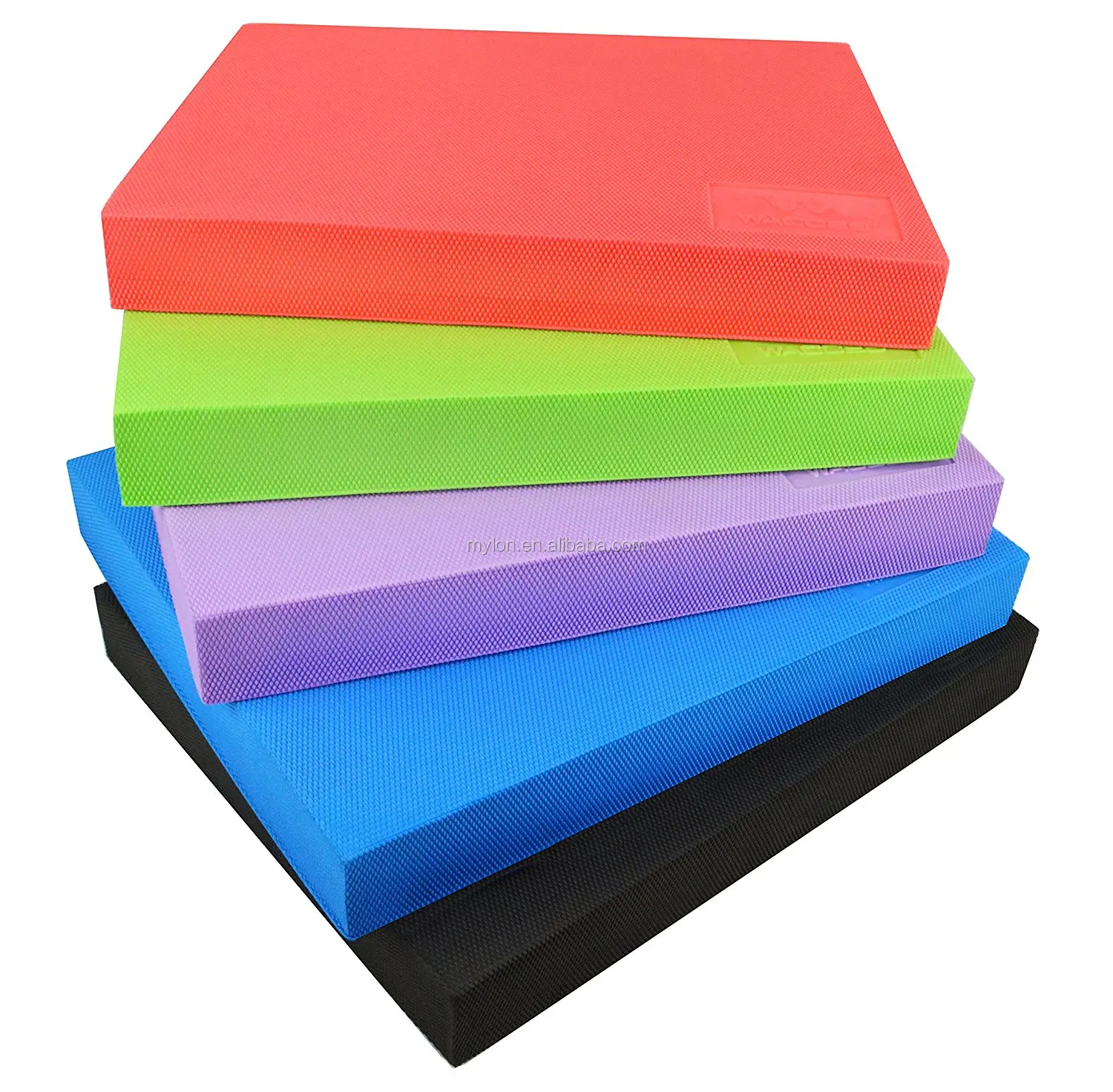
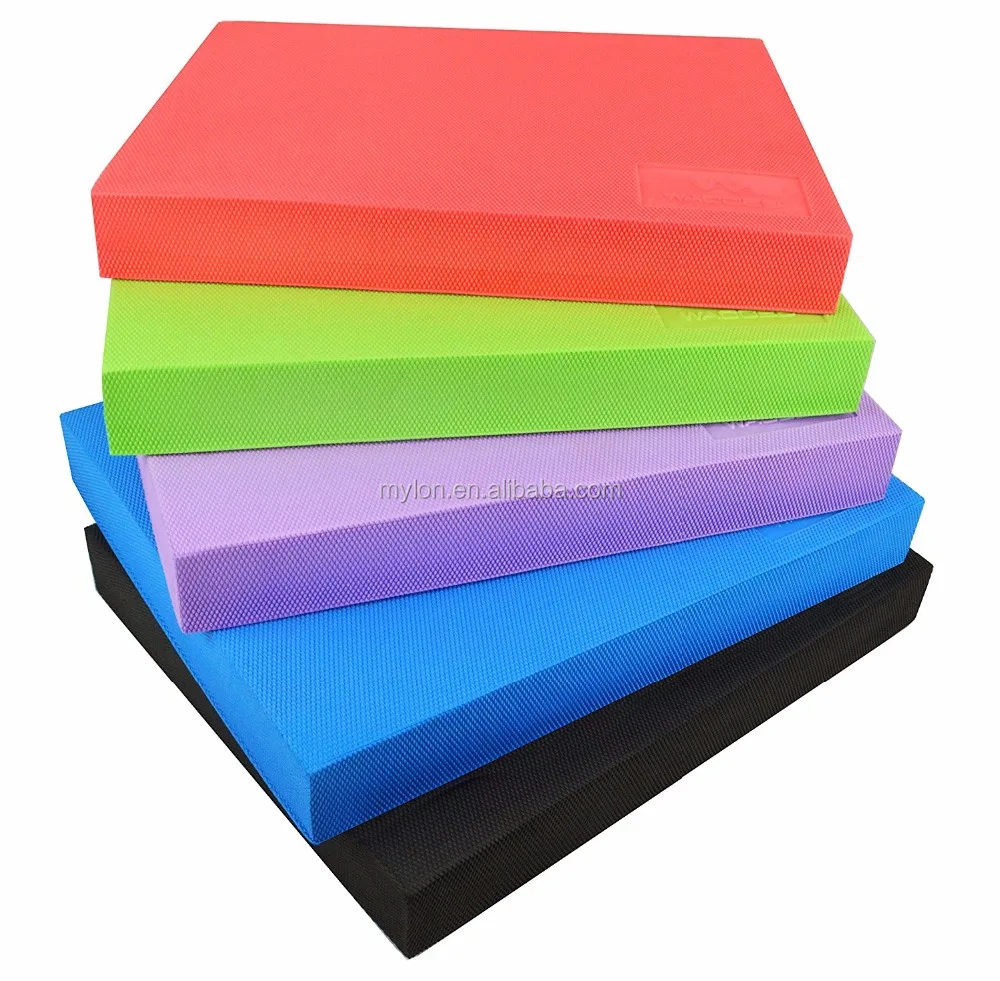


Physical Therapist Recommended Premium Quality Non-slip Balance Pad/tpe balance pad
TPE stands for Thermo Plastic Elastomer. It is a range of polymers (plastics) that can be processed (moulded or extruded) like a plastic when over their melt temperature, but exhibit properties of thermoset rubber. The advantage to using TPE over thermoset rubber, is that it can be easily re-moulded and re-worked whereas
rubber cannot.TPE foam material is considered better for the environment because it requires less energy when
it is manufactured. TPE is also recyclable because it can be reshaped and reused for different purposes.
Environment
TPE foam is considered better for the environment because it requires less energy when it is manufactured. TPE
is also recyclable because it can be reshaped and reused for different purposes. In general, it contains less toxic components, such as phthalates and chlorine, which are used to make PVC and other plastics. The strong odor
of synthetic rubber is caused by chemicals that create off-gases that are released into the air. TPE foam does not have this distinctive odor.
Temperature
The creation of TPE foam was based on the need to find a resilient replacement for rubber in automobiles and other applications where there is exposure to fluctuating temperatures. TPE foams stand up to extremes in both
hot and cold temperature without cracking.
Weight and Water
TPE foam is injected with hydrogen, which makes half as heavy by volume as neoprene. The light weight also provides environmental and financial benefits because of the savings in transporting the material. Because TPE is
a closed cell structure, it is completely waterproof. An example of an open cell structure is a rubber sponge.
Thermal and Sound Insulation
Thermoplastic elastomers have a closed cell structure similar to synthetic rubber. Yet the measurement of the
ability of TPE to retain warmth, or its Clo Value, is greater than rubber. Boards that are backed with TPE
foam have superior electro-insulation. TPE is used in acoustic applications for its ability to insulate sound.
Hygienic
TPE foam is used in applications as a backing to products made of fabric, such as covering and cushions for outdoor furniture. TPE foam does not absorb water, therefore the potential for mold and mildew to form is eliminated if the fabric gets wet.
Tensile Properties
Tensile properties are measurements used to describe how an elastomer performs when stretched. Several
tests are commonly used to give an indication of how a TPE will perform in end-use environments.
Tensile at Break
This measurement is also called Ultimate Tensile. In this test, a piece of elastomer is stretched until it breaks. The amount of force needed to break the material is measured. Units are typically given in pounds per square inch (psi) or megaPascals (MPa). Elastomers with high ultimate tensile properties will be more difficult to break by stretching than an elastomer with lower values on this test.
Tear Strength
This value describes how well the elastomer resists tearing. The tear strength test essentially the same as the tensile at break test except the test bar is notched on one side to provide a propagation point. The material is stretched and the amount of force at which the test bar tears completely is recorded. Units are typically given in psi or kiloNewtons per meter (kN/m).
Tensile Modulus
In the tensile modulus test, the elastomer is stretched and resistance to the stretching is measured over a range of elongation points. This is often reported as tensile at various percentages of the original length of elastomer, such as 50, 100 and 300 percent. An elastomer might have a strong resistance to stretching initially but become weaker as it elongates (called "necking").
Elongation at Break
Elongation does not measure how hard or easy the material is to stretch, but simply how far it will stretch before it breaks. This is reported in percentage of original length. Some soft elastomers will stretch to greater than 1000 percent of their original length before breaking. A soft elastomeric TPE will typically have a much higher value
than a hard rigid material.
Factors Affecting Values
The method in which test plaques are molded and the direction of flow affect the tensile property values. For this reason, many elastomers are measured for tensile properties in both direction of flow and transverse to direction
of flow.
Direction of Flow
Like many other elastomer properties, tensile properties are affected by the orientation of the polymer molecules upon molding. Thus tensile properties can vary widely depending on whether the stretching was done in the direction of the polymer flow during molding, or in the transverse direction.
Test Plaques (Extrusion vs. Injection Molded)
Some tests are performed on injection molded plaques, while others are performed on extruded plaques. It is important to compare values only on similar test plaque types since there can be a significant difference in values.
|
Material |
TPE |
|
Color |
Up to 12 patterns&more than 10 Colors |
|
Size |
40*50*6 cm |
|
Weight |
560g±15g |
|
Logo |
embossed logo as customer requested |
|
Certification Available: |
ROHS,REACH,PAHS,PHTHALATES,CE |
|
Advantage: |
Eco-friendly,Water-proof,Non-slipping, Nontoxic, Comfortable |
|
Product introduction: |
The ECO-friendly material made yoga pad provides a comfortable and safe practice area and padding for gym floors. |
|
spec: 1m*2m |
|
|
|
|
|
|
|
|
examination project |
unit |
name |
|||||
|
L-1500 |
L-2000 |
L-2500 |
L-3000 |
L-4000 |
|||
|
tensile strength at break |
mpa |
|
|
|
0.25-0.3 |
|
|
|
elongation at break |
% |
240-290 |
220-250 |
180-230 |
170-200 |
150-180 |
|
|
ASKER“ C” hardness |
° |
40-45° |
30-35° |
20-25° |
15-20° |
12-15° |
|
|
tear strength |
KN/M |
|
|
7-10 |
8.5-11 |
9-12 |
|
|
density |
Kg/m 3 |
60Kg/m 3 |
50Kg/m 3 |
40Kg/m 3 |
30Kg/m 3 |
25Kg/m 3 |
|
|
compression set |
% |
|
|
|
54.2 |
|
|
|
compression set |
Ø 23mm specimen |
% |
0.2 |
0.2 |
0.2 |
0.2 |
0.2 |
|
24h*25% |
50*50mm specimen |
% |
|
|
|
|
|
|
combustion test(straight) |
B1 |
|
|
32 |
32 |
32 |
|
|
B2 |
|
|
26 |
26 |
26 |
||
|
ignitability |
|
|
|
≤ 150 |
|
||